Professional QA/QC Courses for Engineers
QA/QC Courses for Engineers at Petrotech Academy are designed for Mechanical and Civil Engineering graduates, freshers and experienced professionals who want to develop technical knowledge in Quality Assurance and Quality Control for industrial and construction projects.
Our industry-oriented training programmes introduce participants to inspection procedures, quality control documentation, engineering specifications, material inspection, testing methods and quality management practices followed in Oil & Gas, Petrochemical, Refinery, Power and EPC projects.
Whether you are beginning your engineering career or looking to strengthen your existing inspection and quality control knowledge, our courses aim to help you understand the responsibilities and technical requirements of QA/QC professionals.
What is Quality Assurance and Quality Control?
Quality Assurance (QA) and Quality Control (QC) are important functions in engineering, construction, manufacturing and industrial project execution.
Quality Assurance focuses on establishing procedures and systems to prevent quality-related problems. Quality Control involves inspection, testing and verification to ensure that materials, equipment and completed work comply with approved specifications and project requirements.
QA/QC Engineers and Inspectors coordinate with construction teams, engineering departments, clients, third-party inspection agencies and contractors to maintain the required quality standards throughout project execution.

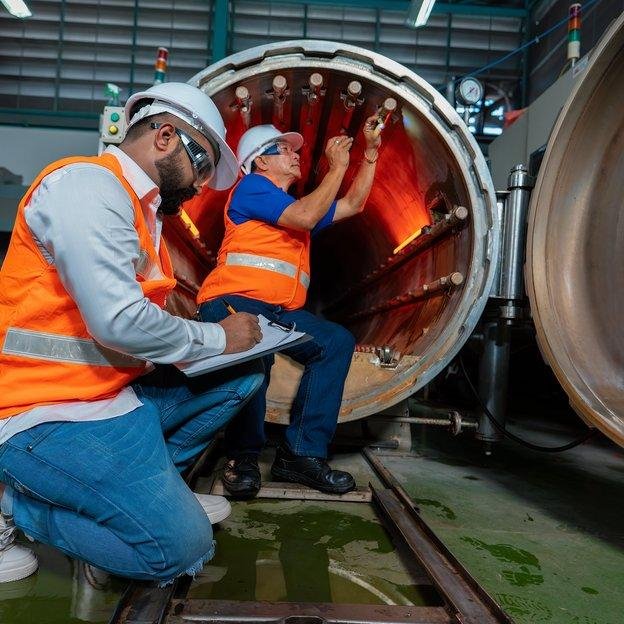
Mechanical QA/QC Courses
Mechanical QA/QC professionals are involved in inspection and quality control activities associated with mechanical equipment, piping systems, fabrication and installation works.
Our mechanical QA/QC training topics introduce participants to:
- Mechanical engineering drawings and specifications.
- Material inspection and verification.
- Inspection and Test Plans (ITPs).
- Method Statements and quality procedures.
- Inspection Requests and quality documentation.
- Welding inspection fundamentals.
- Piping fabrication and erection inspection.
- Pressure testing and hydrotesting.
- Static equipment inspection.
- Rotating equipment inspection.
- Non-Destructive Testing (NDT) fundamentals.
- Quality records and handover documentation.
These subjects are relevant to mechanical construction and maintenance activities in industrial facilities.
Civil QA/QC Courses
Civil QA/QC professionals play an important role in ensuring that construction activities comply with approved drawings, specifications and project quality requirements.
The training topics may include:
- Civil engineering drawings and specifications.
- Earthwork and excavation inspection.
- Soil compaction and field density testing.
- Concrete quality control.
- Reinforcement inspection.
- Formwork inspection.
- Concrete pouring and curing procedures.
- Structural steel inspection fundamentals.
- Building and infrastructure quality control.
- Material approvals and inspection documentation.
- Civil Inspection and Test Plans.
- Non-Conformance Reports (NCRs) and corrective actions.
These subjects are useful for understanding quality requirements in industrial, commercial and infrastructure construction projects.
Piping and Welding Inspection
Piping and welding quality control are essential activities in Oil & Gas, Petrochemical and Refinery projects.
Participants can develop an understanding of piping fabrication, installation and inspection requirements.
Important topics include:
- Piping drawings and Piping and Instrumentation Diagrams (P&IDs).
- Piping material specifications.
- Pipe, fittings and flange identification.
- Welding procedures and qualifications.
- Welding Procedure Specifications (WPS).
- Procedure Qualification Records (PQR).
- Welder Performance Qualification (WPQ).
- Visual inspection of welds.
- NDT methods and their applications.
- Pipe fit-up and dimensional inspection.
- Hydrostatic testing.
- Piping reinstatement and mechanical completion.
Static and Rotating Equipment Inspection
Industrial facilities use different types of static and rotating equipment that require proper inspection, testing and quality control.
Static equipment inspection introduces participants to equipment such as pressure vessels, heat exchangers, storage tanks, columns and other stationary process equipment.
Rotating equipment inspection introduces the fundamentals of equipment such as centrifugal pumps, compressors, turbines and associated mechanical components.
Training topics may include equipment drawings, material verification, inspection procedures, installation checks, testing requirements and quality documentation.
RTR, FRP and GRE Inspection
Non-metallic piping systems are widely used in industrial applications because of their corrosion resistance and application-specific properties.
Our relevant training topics can introduce participants to:
- RTR, FRP and GRE piping fundamentals.
- Non-metallic piping materials and applications.
- Pipe and fitting identification.
- Storage, handling and transportation.
- Installation and jointing methods.
- Lamination and bonding fundamentals.
- Inspection and testing requirements.
- Repair procedures and quality documentation.
These topics are relevant to professionals interested in non-metallic piping inspection and quality control.
Who Can Join Our QA/QC Courses?
Our training programmes are suitable for:
- Mechanical Engineering graduates.
- Civil Engineering graduates.
- Fresh engineering graduates.
- Junior QA/QC Engineers.
- Mechanical QA/QC Inspectors.
- Civil QA/QC Inspectors.
- Piping and Welding Inspection professionals.
- Construction and Maintenance Engineers.
- Oil & Gas and EPC industry professionals.
- Technical professionals seeking to strengthen their inspection knowledge.
Prior industry experience may be beneficial for advanced subjects, but fresh graduates can also join suitable foundation-level training programmes.
What Will You Learn?
Through structured training and technical learning materials, participants can develop an understanding of:
- QA/QC roles and responsibilities.
- Engineering specifications and project requirements.
- Inspection and Test Plans.
- Material inspection and verification.
- Inspection procedures and quality documentation.
- Welding and piping inspection fundamentals.
- Static and rotating equipment inspection fundamentals.
- Civil construction quality control.
- Non-Conformance Reports and corrective actions.
- Quality records and project handover procedures.
Career Opportunities in QA/QC
QA/QC knowledge is relevant to various engineering and industrial sectors, including Oil & Gas, Petrochemical, Refinery, Power Generation, Manufacturing and Infrastructure.
Depending on their qualifications, practical experience, training and employer requirements, professionals may explore career opportunities such as:
- Mechanical QA/QC Engineer.
- Civil QA/QC Engineer.
- Piping QA/QC Inspector.
- Welding Inspector.
- Mechanical Inspector.
- Static Equipment Inspector.
- Rotating Equipment Inspector.
- Quality Control Engineer.
- Construction Quality Engineer.
Course completion does not automatically provide an internationally recognized inspector certification or guarantee employment. Certain inspection positions require additional qualifications, experience and independent certification.
Why Choose Petrotech Academy?
PetroTech Academy focuses on industry-oriented engineering education and professional development for fresh graduates and working professionals.
Our approach emphasizes technical fundamentals, practical inspection concepts, industry documentation and quality control requirements relevant to EPC and industrial projects.
We aim to help participants strengthen their technical understanding and prepare for the responsibilities associated with engineering and inspection activities.
Career guidance and information about relevant interview opportunities may also be provided, subject to availability, individual eligibility and employer requirements.
External Learning Resources for QA/QC Professionals
Quality Assurance and Quality Control professionals should continuously develop their technical knowledge and stay informed about applicable international standards, inspection practices and industry requirements.
The following organizations provide useful information and professional resources related to quality management, mechanical engineering, welding inspection and Non-Destructive Testing (NDT).
1. International Organization for Standardization (ISO)
Explore international quality management standards, including ISO 9001, and learn about quality management systems and continual improvement.
Website: https://www.iso.org/standard/9001
2. American Society of Mechanical Engineers (ASME)
Explore engineering codes and standards covering pressure equipment, piping systems, mechanical components and other engineering applications.
Website: https://www.asme.org/codes-standards
3. American Society for Nondestructive Testing (ASNT)
Learn about Non-Destructive Testing methods, professional development, inspection practices and NDT certification pathways.
Website: https://www.asnt.org/
4. American Petroleum Institute (API)
Explore petroleum and natural gas industry standards, technical publications and inspection-related resources.
Website: https://www.api.org/
These external resources can support your learning and help you become familiar with technical organizations and industry practices relevant to QA/QC careers.
Enrol in QA/QC Training at Petrotech Academy
Develop your engineering knowledge and understand the quality requirements of industrial projects through PetroTech Academy’s professional training programmes.
Explore our Mechanical and Civil QA/QC training topics and take the next step towards developing your technical skills for the Oil & Gas and EPC industries.
Contact Petrotech Academy
Website: https://www.petrotechacademy.com
Email: info@petrotechacademy.com
WhatsApp: +91-9392269088
Learn. Develop. Advance Your Engineering Career.