
Practical Guide for EPC Project Planning Engineers/ shutdown& turnaround planning and scheduling for Civil, Mechanical and Electrical Engineers using oracle primavera P6

Project Planning & Scheduling Using Oracle Primavera P6: A Practical Guide to EPC and Shutdown & Turnaround Projects
Build Your Career in Project Planning, Scheduling and Project Controls
Every successful Oil & Gas, Petrochemical, Refinery and Infrastructure project requires effective planning, scheduling, resource coordination and progress monitoring.
Whether it is a large-scale Engineering, Procurement and Construction (EPC) project or a time-critical plant Shutdown and Turnaround, project planning plays a vital role in completing activities safely, efficiently and within the approved project schedule.
Oracle Primavera P6 is one of the widely used project scheduling tools in engineering and construction industries. It helps planning engineers develop project schedules, establish activity relationships, allocate resources, monitor progress, identify delays and forecast project completion.
At Petrotech Academy, our objective is to help engineering students, fresh graduates and working professionals understand how project planning and scheduling are performed in real-world industrial projects.
1. What Is EPC Project Planning?
EPC stands for Engineering, Procurement and Construction. It is a project delivery approach commonly used in Oil & Gas, Petrochemical, Refinery, LNG, Power and Infrastructure industries.
An EPC project involves multiple engineering disciplines, procurement packages, construction activities and commissioning requirements.
A Planning Engineer develops an integrated project schedule to coordinate these activities and monitor their progress throughout the project lifecycle.
Major phases of EPC project planning
1. Engineering Planning
Engineering planning covers the preparation, review and approval of engineering documents and drawings.
Typical activities include:
- Process Flow Diagrams (PFDs) and P&IDs
- Equipment datasheets and specifications
- Civil and structural drawings
- Mechanical equipment drawings
- Piping layouts and isometric drawings
- Electrical and instrumentation engineering
- Material Requisitions (MRs)
- Issued for Construction (IFC) drawings
2. Procurement Planning
Procurement planning ensures that materials, equipment and packages are available when required at the project site.
Typical activities include:
- Material requisition preparation
- Request for Quotation (RFQ)
- Technical and commercial bid evaluation
- Purchase Order (PO) placement
- Vendor document review
- Manufacturing and inspection
- Material dispatch and transportation
- Site material delivery
3. Construction Planning
Construction planning covers the execution of site activities across different disciplines.
| Discipline | Typical planning activities |
|---|---|
| Civil | Excavation, foundations, concrete, structural steel and buildings |
| Mechanical | Equipment installation, alignment, grouting and mechanical completion |
| Piping | Fabrication, erection, welding, NDT and hydrotesting |
| Electrical | Cable tray installation, cable pulling, termination and testing |
| Instrumentation | Instrument installation, tubing, calibration and loop checking |
4. Pre-Commissioning and Commissioning Planning
This phase coordinates system completion, testing and preparation for operational handover.
Typical activities include:
- Mechanical completion
- System handover
- Flushing and cleaning
- Pressure and leak testing
- Electrical testing
- Instrument loop checks
- Functional testing
- Commissioning and start-up, where included in the project scope
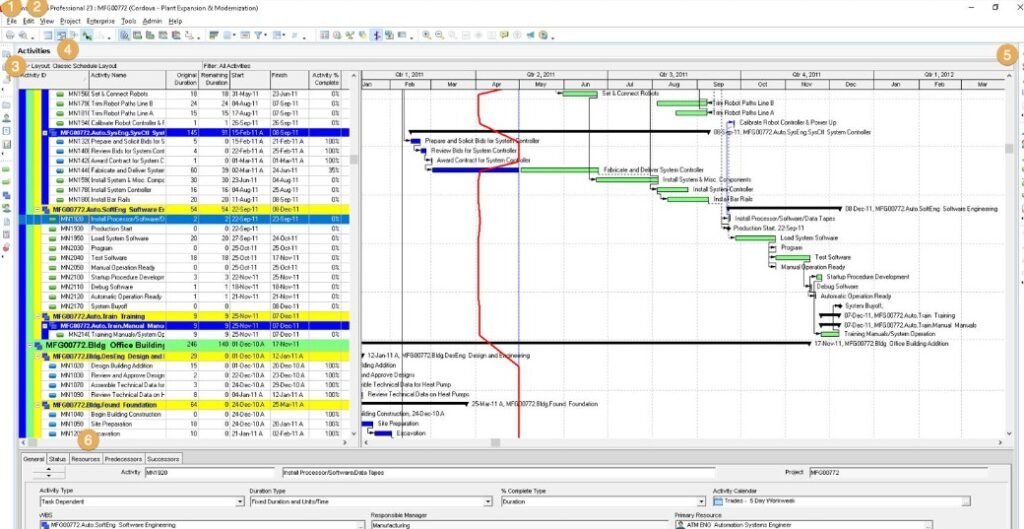
2. How Is Primavera P6 Used in EPC Project Planning?
Oracle Primavera P6 helps Planning Engineers develop and control an integrated project schedule.
The typical planning workflow includes:
- Create the project and establish the Enterprise Project Structure (EPS).
- Develop the Work Breakdown Structure (WBS).
- Define activities for Engineering, Procurement, Construction and Commissioning.
- Assign activity durations and calendars.
- Establish activity relationships (FS, SS, FF and SF).
- Develop the Critical Path Method (CPM) schedule.
- Identify the critical path and available float.
- Assign resources and manpower.
- Establish the approved baseline schedule.
- Update actual progress and remaining durations.
- Analyse schedule performance and identify delays.
- Prepare progress reports, S-curves and recovery schedules.
Important Primavera P6 concepts to learn
- EPS, OBS and WBS
- Activity IDs, activity types and duration types
- Activity calendars
- CPM and critical path
- Total Float and Free Float
- Baseline management
- Resource and manpower loading
- Physical progress measurement
- Earned Value Management (EVM)
- SPI and CPI
- Schedule updating and forecasting
- Recovery planning and delay analysis
3. What Is Shutdown & Turnaround Project Planning?
Shutdown and Turnaround projects involve temporarily stopping an operating plant or selected process units to perform inspection, maintenance, repairs, equipment overhauling, modifications and statutory activities.
Unlike a conventional EPC project, shutdown and turnaround work is generally time-critical. Many activities must be completed within a restricted shutdown window before the plant can safely return to operation.
Effective planning, coordination and execution are therefore essential.
Major phases of Shutdown & Turnaround Planning
1. Pre-Shutdown Planning
This phase starts well before the actual shutdown date.
Typical activities include:
- Scope identification and validation
- Equipment and system identification
- Job packages and work orders
- Material and spare-parts planning
- Manpower and contractor planning
- Tools, tackles and equipment arrangements
- Risk assessment and work method planning
- Integrated shutdown schedule preparation
2. Shutdown Execution Planning
This phase focuses on the detailed sequence of activities during the shutdown window.
Typical work includes:
- Plant shutdown and isolation
- Equipment depressurisation and gas freeing
- Permit-to-work and safety clearances
- Equipment opening and inspection
- Mechanical maintenance and overhauling
- Piping repairs and modifications
- Civil repair activities
- Electrical maintenance
- Instrumentation inspection and calibration
3. Mechanical and Maintenance Activities
Examples include:
- Static equipment inspection and maintenance
- Pressure vessel and heat exchanger maintenance
- Pump and compressor overhauling
- Valve maintenance and replacement
- Piping replacement and repair
- Welding, NDT and pressure testing
- Electrical motor inspection and testing
- Instrument calibration and loop checks
4. Reinstatement and Start-Up
The final phase focuses on completing outstanding work, restoring systems and supporting the safe return of the plant to operation.
Typical activities include:
- Inspection clearance
- Mechanical completion
- Reinstatement of equipment and piping
- Leak testing and functional testing
- Punch-list clearance
- System handover
- Start-up readiness and commissioning support
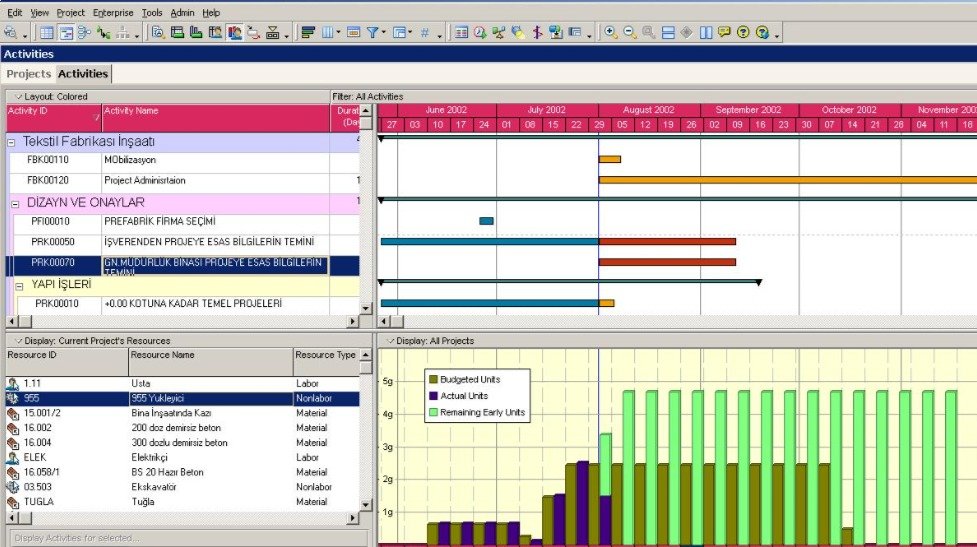
4. How Is Primavera P6 Used in Shutdown & Turnaround Planning?
Primavera P6 helps Planning Engineers develop a detailed, logic-linked schedule for shutdown activities.
The schedule must consider activity sequence, equipment availability, work permits, manpower, access requirements, safety clearances and dependencies between work groups.
Example: Compressor Major Overhauling Schedule
| Activity | Illustrative duration |
|---|---|
| Equipment shutdown and isolation | 1 day |
| Depressurisation and gas freeing | 1 day |
| Compressor opening and dismantling | 2 days |
| Inspection and condition assessment | 2 days |
| Component repair and replacement | 3 days |
| Reassembly and alignment | 2 days |
| Mechanical inspection and testing | 1 day |
| Reinstatement and start-up preparation | 1 day |
These durations are illustrative only. Actual durations depend on equipment condition, job scope, resources and project requirements.
Key P6 responsibilities during shutdown
- Develop detailed Level 4 or Level 5 schedules where required.
- Break down work into equipment-wise and discipline-wise activities.
- Establish activity relationships and execution sequences.
- Identify critical and near-critical activities.
- Allocate manpower and resources.
- Monitor daily planned versus actual progress.
- Identify delays and constraints.
- Prepare look-ahead schedules.
- Develop recovery plans when required.
- Issue daily, weekly and shutdown progress reports.
5. Difference Between EPC Planning and Shutdown Planning
| Parameter | EPC Project Planning | Shutdown & Turnaround Planning |
|---|---|---|
| Project objective | Deliver a defined project scope | Complete planned maintenance and modifications |
| Duration | Often months or years | Usually within a defined shutdown window |
| Main focus | Engineering, procurement and construction integration | Time-critical maintenance and execution |
| Planning level | Integrated project schedules | Highly detailed, equipment-wise schedules |
| Progress monitoring | Engineering, procurement and construction progress | Daily and shift-wise execution progress |
| Major challenge | Interface coordination and long-lead procurement | Tight schedule, work-front availability and resource coordination |
| Key outcome | Project completion and handover | Safe plant restoration and start-up readiness |
Both require strong Primavera P6 knowledge, CPM techniques, resource planning, progress measurement and schedule control.
6. Career Opportunities for Civil, Mechanical and Electrical Engineers
Project Planning and Scheduling is a multidisciplinary career path. Engineers from different educational backgrounds can develop planning skills and contribute to EPC, construction, maintenance and industrial projects.
Civil Engineering Graduates
Learn to plan and monitor:
- Excavation and earthworks
- Foundations and concrete works
- Structural steel erection
- Buildings and infrastructure
- Civil construction progress
Mechanical Engineering Graduates
Learn to plan and monitor:
- Static and rotating equipment installation
- Mechanical maintenance and overhauling
- Process piping fabrication and erection
- Welding, NDT and hydrotesting
- Mechanical completion and commissioning activities
Electrical Engineering Graduates
Learn to plan and monitor:
- Electrical equipment installation
- Cable tray and cable installation
- Cable termination and testing
- Switchgear and transformer installation
- Electrical testing and commissioning activities
With relevant project knowledge and practical experience, candidates can pursue roles such as:
- Junior Planning Engineer
- Planning Engineer
- Project Scheduler
- Project Controls Engineer
- Construction Planning Engineer
- Mechanical Planning Engineer
- Electrical Planning Engineer
- Shutdown Planning Engineer
- Turnaround Planning Engineer
7. Why Learn Primavera P6 at Petrotech Academy?
Learning software alone is not enough to become an effective Planning Engineer. Understanding project execution, engineering disciplines, construction sequences and progress measurement is equally important.
At Petrotech Academy, our training approach focuses on connecting Primavera P6 software knowledge with practical industrial project requirements.
Our Project Planning & Scheduling programme aims to cover:
- Primavera P6 fundamentals and practical application
- EPC project planning and scheduling
- Civil, Mechanical, Piping and Electrical project planning
- WBS development and activity sequencing
- CPM and critical path analysis
- Resource and manpower planning
- Baseline development and schedule updates
- Progress measurement and reporting
- S-curves and Earned Value Management
- Shutdown and Turnaround planning
- Practical project scheduling exercises
- Interview preparation and career guidance
Who Should Join?
- B.Tech and Diploma students
- Civil, Mechanical and Electrical Engineering graduates
- Fresh engineering pass-outs
- Job seekers looking to enter the Oil & Gas and EPC industries
- Working professionals seeking to upgrade their planning skills
- Site Engineers, QA/QC Engineers and Construction Engineers interested in moving into project planning and controls
Start Your Project Planning & Scheduling Journey with Petrotech Academy
The demand for professionals who understand project execution, scheduling, progress monitoring and project controls creates opportunities across EPC contractors, Oil & Gas companies, Petrochemical plants, Refineries, LNG facilities and industrial maintenance projects.
Whether you are a fresher starting your engineering career or an experienced professional looking to expand your skills, developing practical Primavera P6 knowledge can be a valuable step towards a project planning career.
Learn. Practice. Excel.
Join Petrotech Academy and develop the knowledge and practical skills needed to understand EPC project planning and Shutdown & Turnaround scheduling.
Petrotech Academy
Empowering People | Enhancing Skills | Building Futures
🌐 Website: https://www.petrotechacademy.com/
📧 Email: info@petrotechacademy.com
Enquire today about our practical project oriented Project Planning & Scheduling for Civil,Mechanical and Electrical using Oracle Primavera P6
Training is designed to build knowledge and practical skills; employment and placement are subject to individual qualifications, experience and employer selection.
“Don’t just learn Primavera P6 software. Learn how real EPC and Shutdown projects are planned, scheduled, monitored and controlled.”