Major and Minor Overhauling of Static Equipment in Oil & Gas, Petrochemical and Power Plants
Introduction
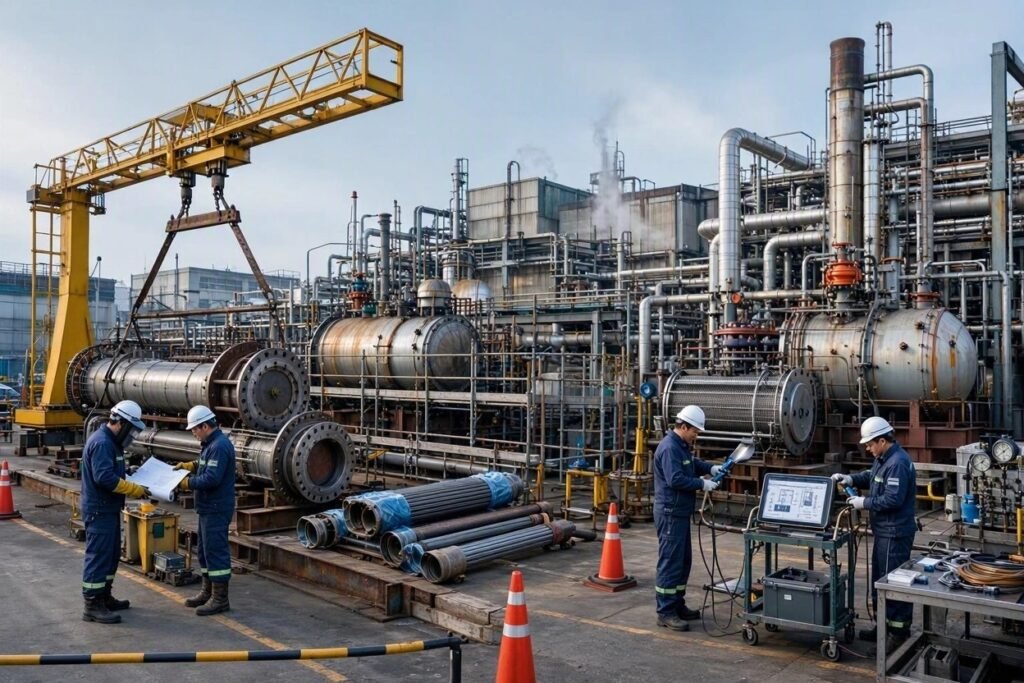
Mechanical static equipment plays a critical role in the safe and reliable operation of Oil & Gas, Petrochemical, Refinery, LNG and other process industries. Unlike rotating equipment, static equipment does not have rotating or moving machinery components during normal operation. However, it operates under demanding conditions involving high pressure, temperature, corrosion, erosion and chemical exposure.
To maintain equipment integrity, operational reliability and plant safety, periodic inspection, maintenance, repair and overhauling activities are essential.
Major and minor overhauling of static equipment are important activities carried out during plant shutdowns, turnarounds, planned maintenance and equipment maintenance campaigns.
These activities involve inspection, cleaning, dismantling, internal examination, replacement of defective components, welding repairs, Non-Destructive Testing (NDT), pressure testing and final reinstatement, depending on the equipment condition and approved work scope.
This guide explains the major and minor overhauling activities, equipment types, inspection procedures, QA/QC responsibilities, applicable codes and standards, and career opportunities in the Oil & Gas industry.
Whether you are a Mechanical Engineering student, a fresh graduate, a diploma holder or a working professional looking to enter the Oil & Gas sector, understanding static equipment overhauling can help you develop valuable industry knowledge.
1. What Is Mechanical Static Equipment?
Mechanical static equipment refers to industrial equipment that generally has no rotating machinery elements during normal operation and is used to contain, store, transfer, separate or process fluids and gases.
Static equipment is widely used in refineries, petrochemical plants, gas processing facilities, offshore platforms, LNG terminals and chemical plants.
Common Types of Static Equipment
- Pressure Vessels
- Heat Exchangers
- Storage Tanks
- Columns and Towers
- Drums and Separators
- Reactors
- Filters and Strainers
- Boilers and Steam Drums
- Air-Cooled Heat Exchangers
- Silencers and Scrubbers
- Fired Heaters and associated pressure parts
- Pig Launchers and Receivers
Each equipment type has specific inspection, maintenance and overhauling requirements depending on its design, service conditions, material of construction and operating history.
2. What Is Overhauling of Static Equipment?
Overhauling is a planned maintenance activity involving the inspection, examination, cleaning, repair, replacement and restoration of equipment to ensure its safe and reliable operation.
The actual work scope depends on equipment condition, inspection findings, risk assessment, engineering recommendations, manufacturer requirements and approved project procedures.
Overhauling is generally classified into two categories:
- Major Overhauling: A comprehensive maintenance and inspection activity involving extensive dismantling, internal inspection, detailed examination and, where required, repairs or replacement of major components.
- Minor Overhauling: A limited maintenance activity involving routine inspection, cleaning, gasket replacement, minor component replacement and other repairs that do not require extensive equipment dismantling.
The distinction is not universal. A plant owner or project may define major and minor overhauling differently in its maintenance procedures and turnaround scope.
3. Major Overhauling of Static Equipment
Major overhauling is generally performed during planned plant shutdowns or major turnaround activities when equipment requires extensive inspection, maintenance or repair.
It may involve opening equipment, removing internal components, cleaning internal surfaces, carrying out detailed inspections, performing NDT, executing approved repairs and completing pressure testing where required.
Major Overhauling Activities
1. Pre-Overhauling Planning
Before starting the work, the maintenance and QA/QC teams review:
- Equipment data sheets and technical specifications.
- Equipment General Arrangement (GA) drawings.
- Fabrication and as-built drawings.
- Previous inspection reports.
- Equipment maintenance history.
- Inspection recommendations.
- Approved method statements and Inspection and Test Plans (ITPs).
- Work permits, isolation plans and safety requirements.
- Required manpower, tools, lifting equipment and materials.
2. Equipment Isolation and Preparation
Before opening equipment, the operations and maintenance teams ensure that the equipment is safely prepared.
Typical activities include:
- Equipment shutdown and process isolation.
- Lockout/Tagout (LOTO).
- Installation and verification of blinds or spades as required.
- Depressurisation and draining.
- Purging and gas freeing.
- Verification of safe atmospheric conditions.
- Confined-space entry arrangements, where applicable.
- Issuance of approved work permits.
All activities must follow the plant’s approved isolation and safety procedures.
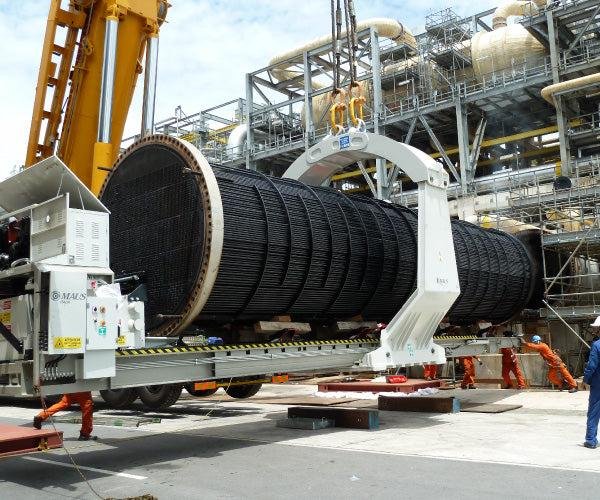
3. Opening and Dismantling
Depending on equipment design and work scope, activities may include:
- Removal of manhole and handhole covers.
- Removal of channel covers and floating heads.
- Removal of internal trays and packing.
- Removal of mist eliminators and demister pads.
- Removal of filter elements.
- Dismantling of removable internal components.
- Removal of defective gaskets and bolting.
- Identification and preservation of dismantled components.
Proper identification, handling and storage are essential to avoid damage and ensure correct reinstatement.
4. Internal Cleaning
Cleaning is performed to remove process deposits, scale, sludge, corrosion products and other contaminants.
Common methods may include:
- High-pressure water jetting.
- Chemical cleaning using an approved procedure.
- Mechanical cleaning.
- Manual cleaning.
- Vacuum cleaning.
- Other equipment-specific cleaning methods.
The selected method must be compatible with the equipment material, process contamination and site safety requirements.
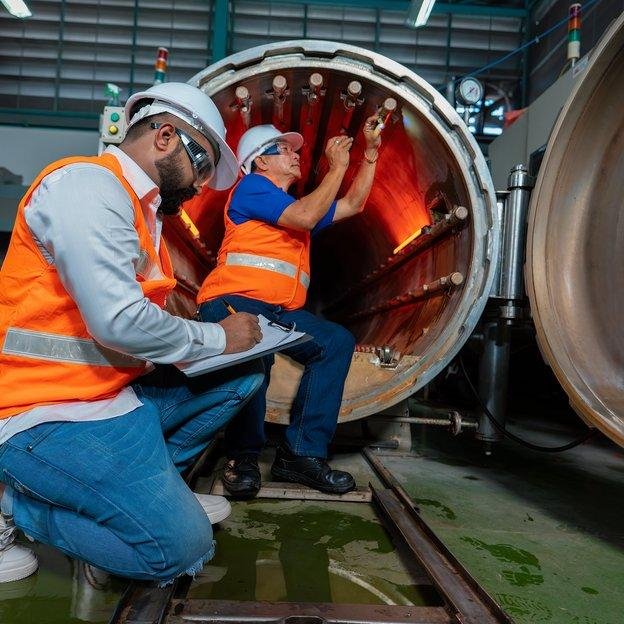
5. Detailed Internal and External Inspection
After cleaning, the inspection team examines the equipment for:
- General corrosion.
- Localised corrosion and pitting.
- Erosion and metal loss.
- Cracks and surface discontinuities.
- Deformation and distortion.
- Weld deterioration.
- Internal lining or coating damage.
- Nozzle and manway condition.
- Support and attachment condition.
- Internal component damage.
Inspection methods may include Visual Testing (VT), thickness measurement, surface NDT and other examination techniques selected by the authorised inspection personnel.
6. Non-Destructive Testing (NDT)
NDT is performed to assess material and weld integrity without damaging the component.
Common methods include:
- Visual Testing (VT).
- Liquid Penetrant Testing (PT).
- Magnetic Particle Testing (MT).
- Radiographic Testing (RT).
- Ultrasonic Testing (UT).
- Phased Array Ultrasonic Testing (PAUT), where specified.
- Time of Flight Diffraction (TOFD), where specified.
The NDT method, examination extent and acceptance criteria must be established by the applicable code, approved inspection plan and project specification.
7. Repair and Replacement Activities
Based on inspection findings and engineering approval, repair work may involve:
- Replacement of defective gaskets and bolting.
- Repair or replacement of damaged internal components.
- Weld repairs.
- Replacement of damaged nozzles or sections.
- Restoration of internal lining or coating.
- Repair of support attachments.
- Replacement of corroded or damaged components.
Pressure-retaining repairs must be evaluated and executed under the applicable engineering and repair requirements. Welding must follow approved procedures and qualified personnel requirements.
8. Final Inspection and Pressure Testing
After completing repairs, the equipment undergoes the required final inspection and testing.
Depending on the equipment and repair scope, this may include:
- Visual inspection of completed repairs.
- Required NDT and examination.
- Dimensional inspection.
- Verification of internal components.
- Hydrostatic or other approved pressure testing, where required.
- Leak testing, where specified.
- Verification of inspection records and test certificates.
Not every overhaul requires a hydrotest. Testing must be based on the approved engineering assessment, applicable code and plant requirements.
9. Reinstatement and Handover
The final stage includes:
- Installation of internal components.
- Verification of internals and orientation.
- Installation of new approved gaskets.
- Flange alignment and bolting inspection.
- Tightening or controlled bolt-tensioning as specified.
- Closing manways and handholes.
- Removal of temporary blinds in accordance with the approved reinstatement procedure.
- Completion of punch-list items.
- Final QA/QC inspection.
- Submission of inspection and maintenance records.
- Handover to the operations team
4. Minor Overhauling of Static Equipment
Minor overhauling involves limited maintenance activities intended to address identified defects, restore equipment condition and maintain operational reliability without extensive dismantling.
The exact scope depends on the equipment, inspection findings and approved maintenance plan.
Typical Minor Overhauling Activities
- External visual inspection.
- Cleaning of accessible equipment surfaces.
- Inspection of external corrosion and coating condition.
- Inspection of nozzles, flanges and connections.
- Replacement of defective gaskets.
- Replacement of selected bolting.
- Minor leakage rectification under an approved repair procedure.
- Inspection of accessible internal components.
- Replacement of filter elements or other consumables.
- Inspection and minor repair of insulation or cladding.
- Inspection of equipment supports and attachments.
- Verification of nameplates and equipment identification.
- Completion of required inspection reports.
Minor overhauling does not automatically mean that equipment can remain in service. Isolation and shutdown may still be necessary depending on the work activity and plant safety requirements.
5. Major vs Minor Overhauling: Key Differences
| Description | Major Overhauling | Minor Overhauling |
|---|---|---|
| Scope | Extensive maintenance and inspection | Limited maintenance and inspection |
| Dismantling | Extensive, depending on equipment | Usually limited |
| Internal inspection | Detailed internal examination | Accessible or selected areas |
| Cleaning | Comprehensive cleaning as required | Localised or routine cleaning |
| NDT | More extensive, based on inspection plan | Limited, based on findings |
| Repairs | May include major component repairs | Generally minor repairs |
| Component replacement | May involve internals or pressure-retaining parts | Usually selected components or consumables |
| Testing | As required by repair and inspection scope | As required by work scope |
| Duration | Generally longer | Generally shorter |
| Planning | Detailed turnaround planning | Routine or limited maintenance planning |
The classification should always follow the plant owner’s maintenance strategy and approved work scope.
6. Equipment-Wise Major and Minor Overhauling Activities
Understanding equipment-specific maintenance activities is important for Mechanical Maintenance Engineers, QA/QC Inspectors, Inspection Engineers and Turnaround Professionals.
A. Pressure Vessels
Pressure vessels are used to store or process fluids and gases under pressure.
Major Overhauling:
- Opening of manways and nozzles as required.
- Internal cleaning.
- Internal and external visual inspection.
- Shell and head thickness measurements.
- Inspection of weld seams.
- Inspection of corrosion, pitting and erosion.
- Inspection of internal supports and attachments.
- NDT and approved repair activities.
- Pressure testing when required.
Minor Overhauling:
- External visual inspection.
- Inspection of accessible nozzles and flanges.
- Replacement of defective gaskets and bolting.
- Minor coating and insulation repairs.
- Localised maintenance based on inspection findings.
B. Heat Exchangers
Heat exchangers transfer heat between process fluids and are commonly used in refineries and petrochemical plants.
Major Overhauling:
- Removal of channel covers and bundles, where applicable.
- Tube-side and shell-side cleaning.
- Tube inspection.
- Tube thickness measurement.
- Eddy Current Testing (ECT), where applicable.
- Tube plugging or replacement, as approved.
- Inspection of tubesheets and baffles.
- Inspection of shell, channel and pass partition plates.
- Gasket replacement.
- Required pressure and leak testing.
Minor Overhauling:
- External inspection.
- Inspection of accessible flanges and connections.
- Replacement of selected gaskets.
- Cleaning of accessible areas.
- Minor leakage rectification under an approved procedure.
C. Columns and Towers
Columns and towers are used for separation, distillation, absorption and other process operations.
Major Overhauling:
- Opening of manways.
- Internal cleaning.
- Inspection of trays and downcomers.
- Inspection of packing and support grids.
- Inspection of distributors and collectors.
- Inspection of demister pads.
- Inspection of shell and welds.
- Thickness measurement and NDT.
- Replacement or repair of defective internals.
Minor Overhauling:
- External inspection.
- Inspection of accessible nozzles and attachments.
- Minor external coating repairs.
- Inspection of accessible platforms and supports.
- Selected maintenance activities based on findings.
D. Storage Tanks
Storage tanks are used for storing crude oil, petroleum products, chemicals and other liquids.
Major Overhauling:
- Tank cleaning and safe preparation.
- Internal floor inspection.
- Shell plate inspection.
- Roof inspection.
- Thickness measurement.
- Bottom plate scanning, where specified.
- Inspection of weld seams.
- Inspection of nozzles and attachments.
- Foundation and settlement assessment.
- Approved repairs and required testing.
Minor Overhauling:
- External visual inspection.
- Inspection of roof accessories and connections.
- Inspection of nozzles and manholes.
- Coating maintenance.
- Minor external repairs.
- Inspection of accessible appurtenances.
E. Filters and Strainers
Filters and strainers remove unwanted particles from process fluids.
Major Overhauling:
- Opening of filter housings.
- Removal of filter elements.
- Internal cleaning.
- Inspection of filter baskets and supports.
- Inspection of housing and internal surfaces.
- Replacement of damaged components.
- Gasket replacement and required testing.
Minor Overhauling:
- Replacement of filter cartridges or elements.
- Cleaning of baskets.
- Gasket replacement.
- Inspection of covers and connections.
- Routine external checks.
F. Air-Cooled Heat Exchangers
Air-cooled heat exchangers use ambient air to cool process fluids.
Major Overhauling:
- Inspection of headers and plugs.
- Inspection of tubes and tube-to-header connections.
- Inspection of finned tubes.
- Inspection of structural supports.
- NDT and leak testing as specified.
- Repair or replacement of defective components.
Minor Overhauling:
- Cleaning of accessible surfaces.
- Inspection of headers and connections.
- Inspection of external corrosion.
- Replacement of selected gaskets and plugs.
- Minor structural or coating maintenance.
7. QA/QC Responsibilities During Static Equipment Overhauling
Quality Assurance and Quality Control play a major role in ensuring that overhauling activities are carried out in accordance with approved procedures, technical specifications, applicable codes and project requirements.
Key Responsibilities of QA/QC Engineers and Inspectors
1. Document Review
- Review approved method statements.
- Review Inspection and Test Plans (ITPs).
- Review equipment drawings and data sheets.
- Verify applicable codes and standards.
- Review previous inspection reports.
- Confirm approved repair procedures.
2. Material Inspection
- Verify material identification.
- Review Material Test Certificates (MTCs), where applicable.
- Check material grade and specifications.
- Verify heat-number traceability.
- Inspect replacement components and gaskets.
- Confirm material storage and preservation requirements.
3. Inspection During Dismantling
- Witness equipment opening where required.
- Check identification of dismantled components.
- Inspect internal surfaces after cleaning.
- Verify equipment condition against inspection requirements.
- Record defects and observations.
4. NDT Coordination and Verification
- Verify approved NDT procedures.
- Check NDT personnel qualifications.
- Confirm examination locations and extent.
- Review NDT reports.
- Verify results against applicable acceptance criteria.
- Ensure rejected indications are addressed through approved procedures.
5. Welding and Repair Inspection
- Verify approved WPS and supporting PQR.
- Verify welder qualifications.
- Check fit-up and joint preparation.
- Inspect welding consumables.
- Monitor welding activities as required.
- Verify preheat and PWHT requirements, where applicable.
- Review completed weld inspection and NDT reports.
6. Final Inspection and Testing
- Verify completion of approved repair work.
- Inspect internal components before closure.
- Verify gasket and bolting installation.
- Witness required pressure or leak tests.
- Verify test records.
- Ensure all inspection points are signed off.
7. Documentation and Handover
- Maintain inspection reports.
- Review NDT reports and repair records.
- Verify pressure test documentation.
- Close inspection punch points.
- Compile quality records and final dossiers.
- Support final equipment handover.
8. Important Codes and Standards Used in Static Equipment Inspection and Overhauling
Static equipment inspection and repair activities may be governed by international codes, standards, manufacturer requirements and plant-specific procedures.
Common references include:
| Code / Standard | General Application |
|---|---|
| ASME Section VIII | Construction of pressure vessels |
| ASME Section IX | Qualification of welding and brazing procedures and personnel |
| ASME Section V | Non-Destructive Examination |
| API 510 | In-service inspection, rating, repair and alteration of pressure vessels |
| API 572 | Inspection practices for pressure vessels |
| API 653 | Inspection, repair, alteration and reconstruction of storage tanks |
| API 650 | Welded tanks for oil storage |
| API 660 | Shell-and-tube heat exchangers |
| API 661 | Air-cooled heat exchangers |
| API 572 | Pressure vessel inspection practices |
| ASME PCC-2 | Repair of pressure equipment and piping |
| NBIC | Inspection and repair guidance for boilers and pressure vessels, where applicable |
Important: The applicable code depends on equipment type, design basis, jurisdiction, service conditions and whether the activity is original construction, in-service inspection or repair. For example, API 510 is an in-service pressure vessel inspection code, while ASME Section VIII is primarily a construction code. Always confirm the current applicable edition and project requirements.
9. Important QA/QC Documents Used During Overhauling
A QA/QC Engineer or Inspector should be familiar with the following documents:
- Equipment Data Sheets.
- General Arrangement Drawings.
- Fabrication and As-Built Drawings.
- Previous Inspection Reports.
- Equipment Maintenance History.
- Approved Method Statements.
- Inspection and Test Plans (ITPs).
- Quality Assurance Plans (QAPs).
- Material Test Certificates (MTCs).
- Welding Procedure Specifications (WPS).
- Procedure Qualification Records (PQR).
- Welder Qualification Records (WQTR/WPQ).
- NDT Procedures and Reports.
- Thickness Measurement Reports.
- Repair and Alteration Records.
- PWHT Charts, where applicable.
- Pressure and Leak Test Reports.
- Inspection Checklists.
- Non-Conformance Reports (NCRs).
- Punch Lists and Final Handover Dossiers.
Document requirements vary according to the project and the scope of work.
10. Safety Requirements During Static Equipment Overhauling
Safety is one of the most important considerations during static equipment maintenance and turnaround activities.
Typical hazards include toxic gases, flammable vapours, oxygen deficiency, high temperatures, residual pressure, hazardous chemicals, confined-space risks and work at height.
Important safety requirements include:
- Approved work permits.
- Equipment isolation and LOTO.
- Positive isolation and blind management, where required.
- Depressurisation and draining.
- Gas testing and atmospheric monitoring.
- Confined-space entry permits.
- Proper ventilation.
- Suitable PPE.
- Fire prevention and hot-work controls.
- Safe lifting and rigging arrangements.
- Scaffolding inspection and tagging.
- Emergency rescue arrangements.
- Approved waste disposal and chemical-handling procedures.
No equipment should be opened or entered until the responsible operations and safety teams have confirmed that the required safety conditions are satisfied.
11. Career Opportunities in Static Equipment Overhauling and QA/QC
Static equipment maintenance and inspection create opportunities across refineries, petrochemical plants, LNG facilities, offshore projects and EPC contractors.
Students, diploma holders, fresh graduates and experienced professionals can explore several career paths.
Mechanical Engineering Graduates
Potential roles:
- Mechanical QA/QC Engineer.
- Static Equipment Inspector.
- Mechanical Maintenance Engineer.
- Pressure Vessel Inspector.
- Heat Exchanger Inspector.
- Shutdown and Turnaround Engineer.
- Mechanical Construction Engineer.
Civil Engineering Graduates
Civil engineers can contribute to:
- Equipment foundation inspection.
- Concrete and grout inspection.
- Structural steel inspection.
- Equipment support and platform inspection.
- Foundation repair and rehabilitation.
- Civil QA/QC activities during shutdowns and EPC projects.
Electrical Engineering Graduates
Electrical engineers can contribute to:
- Electrical isolation and LOTO coordination.
- Inspection of electrical equipment associated with static equipment areas.
- Earthing and bonding verification.
- Electrical maintenance and QA/QC activities.
- Shutdown and turnaround coordination.
Career note: Static equipment inspection and pressure-retaining repair activities generally require relevant mechanical, materials or inspection competence. Civil and Electrical graduates can enter the wider QA/QC and EPC project environment through discipline-appropriate training and experience. Specific inspection roles may require additional qualifications, experience or employer approval.
12. Why Should Fresh Engineers Learn QA/QC and Static Equipment Inspection?
Engineering graduates often understand theoretical concepts but may have limited exposure to actual industrial work procedures, inspection documents, equipment drawings, NDT methods and site quality requirements.
Industry-oriented QA/QC training can help bridge this gap.
Through structured learning, students and professionals can develop knowledge of:
- Industrial equipment and piping systems.
- Mechanical static equipment.
- Inspection procedures and checklists.
- QA/QC documentation.
- Material inspection and traceability.
- Welding inspection fundamentals.
- NDT methods and reports.
- Equipment maintenance and overhauling.
- Applicable industry codes and standards.
- EPC project quality requirements.
- Shutdown and turnaround activities.
- Site inspection and reporting practices.
The objective is to build practical understanding and improve readiness for discipline-appropriate entry-level and experienced QA/QC opportunities.
13. Learn Industrial QA/QC with Petrotech Academy
Build Your Technical Knowledge. Develop Industry Skills. Prepare for Your Career.
Petrotech Academy provides industry-oriented technical training designed for engineering students, diploma holders, fresh graduates, job seekers and working professionals interested in Oil & Gas, Petrochemical, Refinery, LNG and EPC industries.
Our training approach focuses on connecting engineering fundamentals with practical industrial applications.
What You Can Learn Through Our QA/QC Training
- Mechanical QA/QC fundamentals.
- Static equipment inspection.
- Major and minor overhauling concepts.
- Pressure vessel inspection fundamentals.
- Heat exchanger inspection.
- Column and tower inspection.
- Storage tank inspection fundamentals.
- Material receiving inspection.
- Welding inspection fundamentals.
- NDT methods and reports.
- Inspection and Test Plans (ITPs).
- QA/QC documentation and reporting.
- Relevant codes, standards and project specifications.
- Shutdown and turnaround quality activities.
- Site inspection practices and interview preparation.
Who Can Join?
- B.Tech and B.E. graduates.
- Diploma holders.
- Mechanical Engineering graduates.
- Civil Engineering graduates.
- Electrical Engineering graduates.
- Fresh engineering pass-outs.
- Job seekers aspiring to enter the Oil & Gas industry.
- Working professionals seeking to strengthen their technical knowledge.
- Engineers planning to transition into QA/QC and inspection-related roles.
Our Learning Approach
Learn → Understand → Practice → Prepare → Progress
Petrotech Academy aims to help learners understand industrial requirements, develop practical technical knowledge and prepare for career opportunities in the EPC and process industries.
Job assistance and candidate referrals may be facilitated through recruitment partner networks, subject to available vacancies, eligibility, employer requirements and recruitment partner selection. Employment or placement is not guaranteed.
14. Frequently Asked Questions (FAQs)
Q1. What is the difference between major and minor overhauling of static equipment?
Major overhauling generally involves extensive dismantling, cleaning, internal inspection, NDT and repairs as required. Minor overhauling involves limited maintenance, inspection, cleaning and replacement of selected components. The actual classification depends on the approved maintenance scope.
Q2. Which equipment is covered under static equipment?
Common examples include pressure vessels, heat exchangers, storage tanks, columns, towers, drums, separators, filters, strainers and air-cooled heat exchangers.
Q3. Is static equipment overhauling performed during plant shutdowns?
Major overhauling is commonly planned during shutdowns and turnarounds. Minor maintenance may be performed during routine maintenance windows or shutdowns, depending on the equipment and safety requirements.
Q4. What does a QA/QC Engineer do during static equipment overhauling?
The QA/QC Engineer verifies that inspection, cleaning, repair, welding, NDT, testing and reinstatement activities comply with approved procedures, ITPs, applicable codes and project specifications.
Q5. Which NDT methods are commonly used for static equipment?
Common methods include VT, PT, MT, RT and UT. PAUT and TOFD may also be used where specified and technically suitable.
Q6. Can fresh Mechanical Engineering graduates enter the QA/QC field?
Yes. Fresh graduates can build foundational knowledge through structured training, practical exposure and suitable entry-level opportunities. Site experience and relevant qualifications help develop professional competence.
Q7. Can Civil and Electrical Engineering graduates join QA/QC training?
Yes. Civil and Electrical graduates can learn QA/QC fundamentals and pursue discipline-appropriate roles in EPC and industrial projects. Static equipment pressure-boundary inspection roles generally require relevant technical competence.
Q8. Is knowledge of Primavera P6 required for static equipment overhauling?
Primavera P6 is not normally an inspection requirement for a QA/QC Inspector. However, planning and scheduling knowledge is valuable for turnaround planning, activity sequencing, progress monitoring and coordination.
Q9. Which codes are important for static equipment inspection?
Depending on equipment and activity, relevant references may include ASME Section V, ASME Section VIII, ASME Section IX, API 510, API 572, API 653, API 650, API 660, API 661 and ASME PCC-2.
Conclusion
Major and minor overhauling of mechanical static equipment is an essential part of maintaining the safety, reliability and operational performance of Oil & Gas and Petrochemical facilities.
From pressure vessels and heat exchangers to columns, storage tanks and filters, every equipment category requires appropriate inspection, maintenance, repair and quality control.
For aspiring engineers, understanding static equipment overhauling provides valuable insight into real industrial maintenance and QA/QC activities. Developing knowledge of inspection procedures, NDT, welding, material traceability, documentation and applicable codes can help prepare candidates for opportunities in the process industries.
Start building your industrial knowledge with PetroTech Academy.
Petrotech Academy
EMPOWERING PEOPLE | ENHANCING SKILLS | BUILDING FUTURES
Oil & Gas | Petrochemical | Refinery | LNG | EPC | Projects
Learn. Practice. Excel.
Website: https://www.petrotechacademy.com/
Email: info@petrotechacademy.com
Enquire about our industry-oriented QA/QC training programmes and take the next step towards developing your technical career.
Subscribe for Weekly Tips
For getting weekly Tips and Latest information, kindly subscribe to our newsletter.
Hi, this is a comment.
To get started with moderating, editing, and deleting comments, please visit the Comments screen in the dashboard.
Commenter avatars come from Gravatar.